Airport runway pavement resurfacing
Asphaglass® to resurface Cagliari airport runway
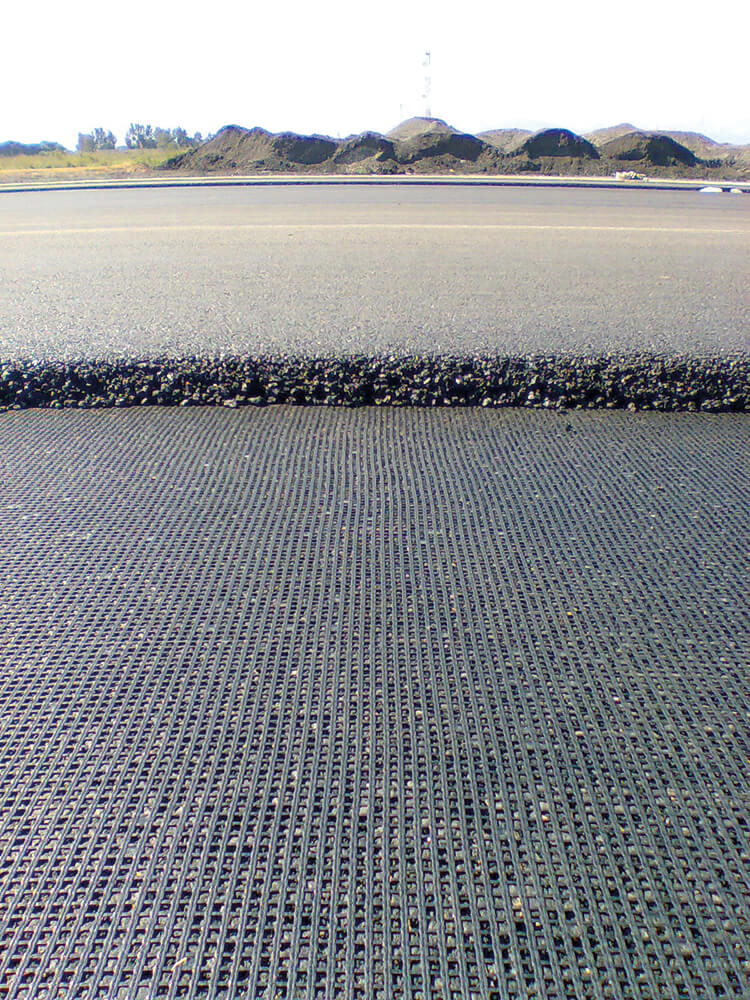
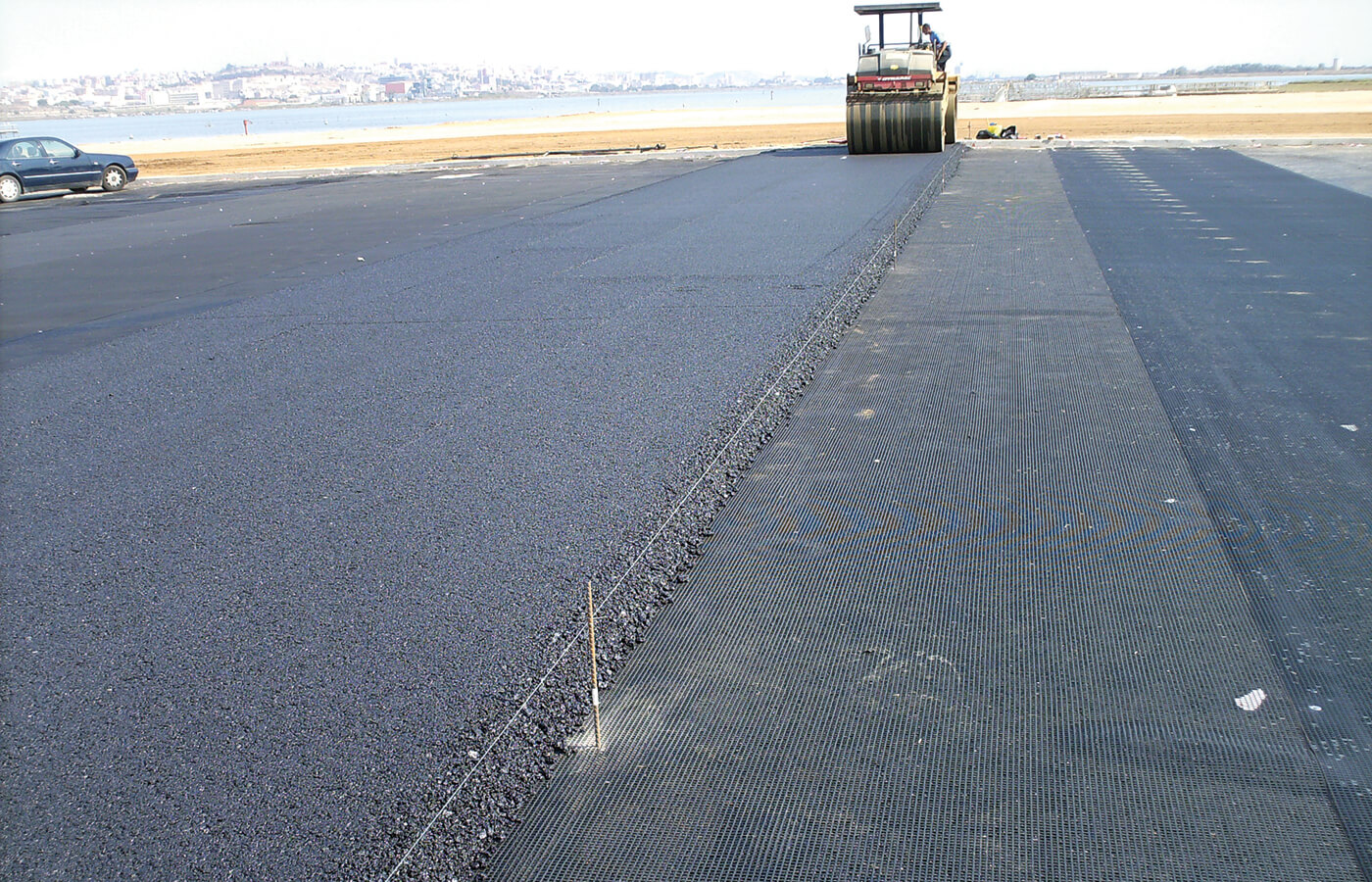
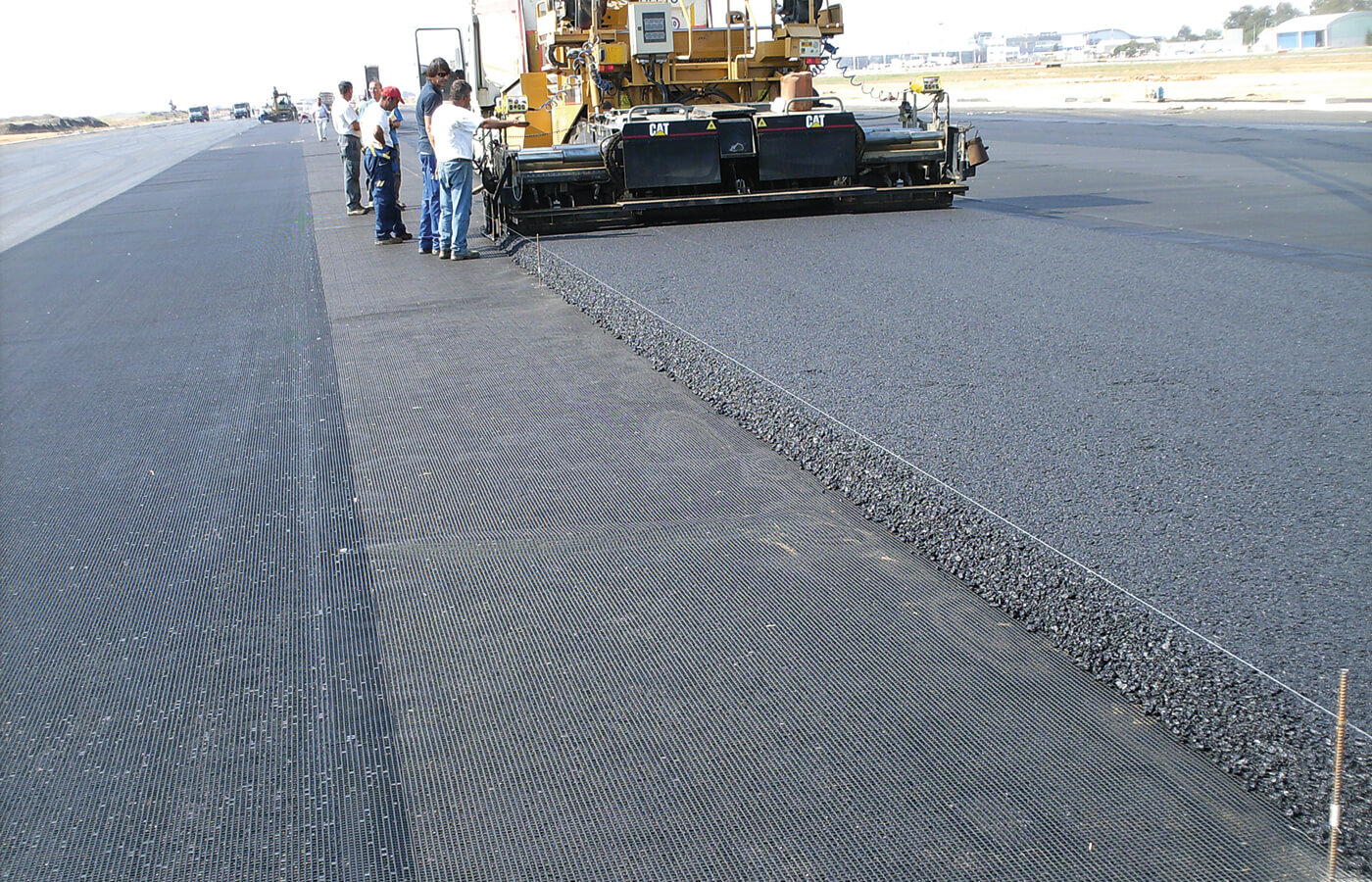
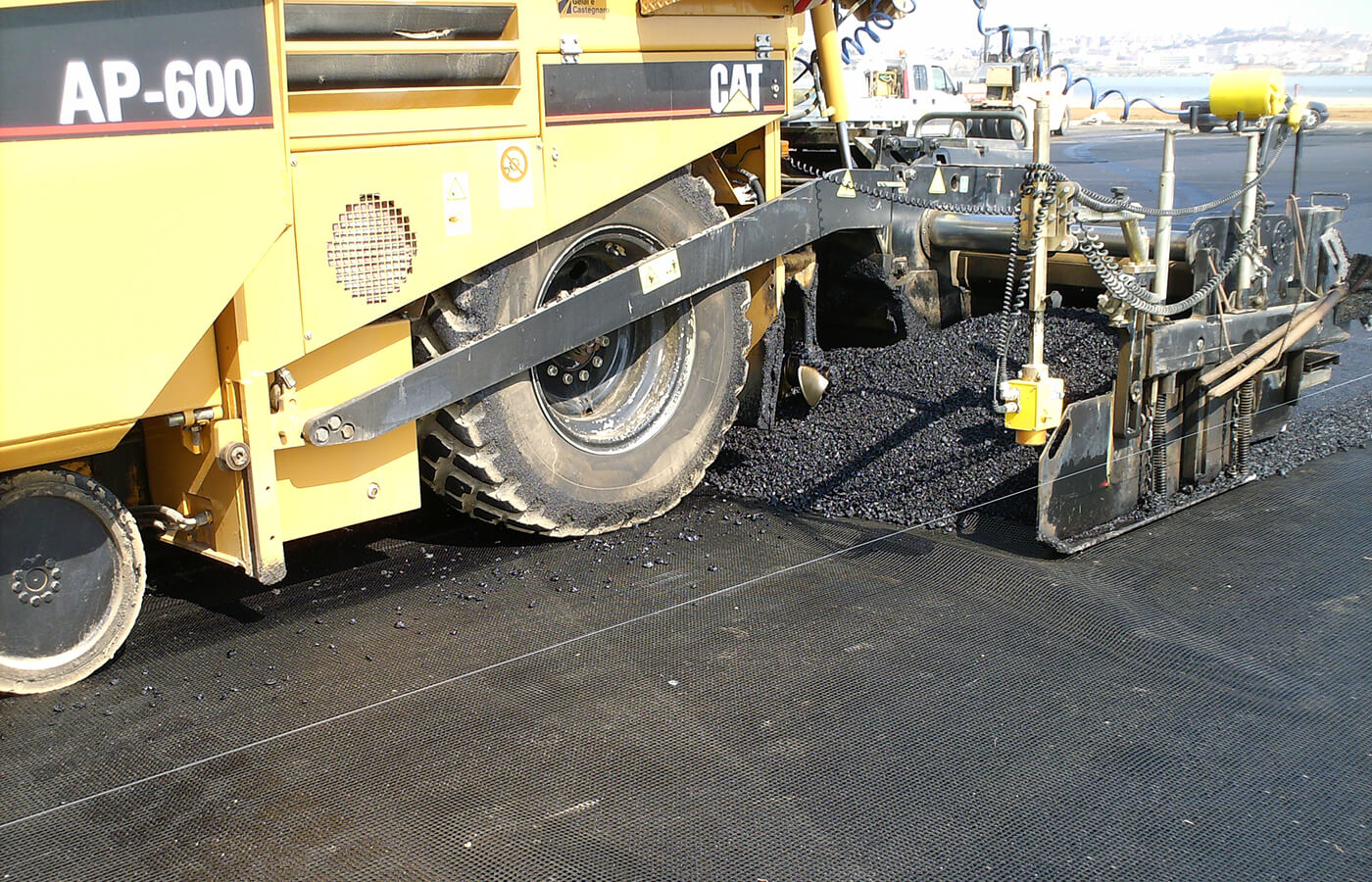
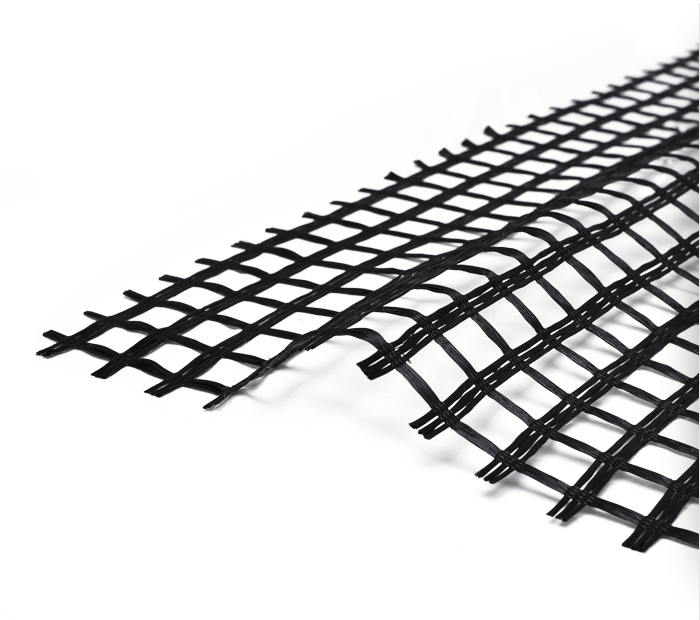
Woven, self-adhesive fiberglass geogrids Asphaglass® were used to reinforce the bituminous pavement and extend the service life of the structure.
Background
Cagliari airport runway, built in the 1920s mainly for military purposes, has required numerous routine maintenance interventions over time across different areas. At the time of the project, the pavement showed localized, repeated cracking; in some spots, technicians had to carry out surface repair treatments because the cracking was particularly widespread and extensive.
ENAC and So.G.Aer SpA funded the redevelopment and refurbishment project for runway 14-32 (main) and the upgrade of the AVL systems. The project provided for the refurbishment of the main runway surface and taxiways, as well as the construction of a new rainwater drainage network.
The structural package
Operators scheduled the works in successive phases, keeping the rest of the road surface in service as a taxiway for the secondary runway. Based on the subsoil’s geotechnical characteristics and the loads transmitted by the runway, designers defined a structural package composed of: an unbound granular sub-base layer, a base layer of recycled and non-recycled bituminous mix, a modified open bituminous binder, and a modified closed bituminous wearing course.
Between the sub-base and the foundation layer, the nonwoven geotextile Geodren® PPST 240 (18 kN/m) was installed to separate and filter the layers. At the interface between the binder and the wearing course, the self-adhesive geogrid Asphaglass® 100/100 (100 kN/m) was used to reinforce the pavement in both directions.
Asphaglass® 100/100: the benefits
The fiberglass geogrid offers high tensile strength with low elongation, good long-term behavior, and good resistance to UV rays and oxidizing agents. It also withstands the degrading effects of saline solutions and chlorides, normally used to de-ice pavements. Its composition, physically similar to the aggregates in bituminous mixes, allows it to be removed and recycled easily using standard milling techniques.
Results
Asphaglass® 100/100 was used to increase the number of load cycles and proportionally extend the service life of the entire pavement. The geogrid was also used to control rutting and crack propagation, reducing the frequency of maintenance work. Client: ENAC and So.G.Aer SpA
Client:
ENAC and So.G.Aer SpA
Contractor:
ELMAS SCARL
Products:
•180,000 m2 of Asphaglass® 100/100 woven fiberglass geogrid;
•180,000 m2 of Geodren® PPST 240

Application

You might also be interested in...
Coastal defence on the Black Sea