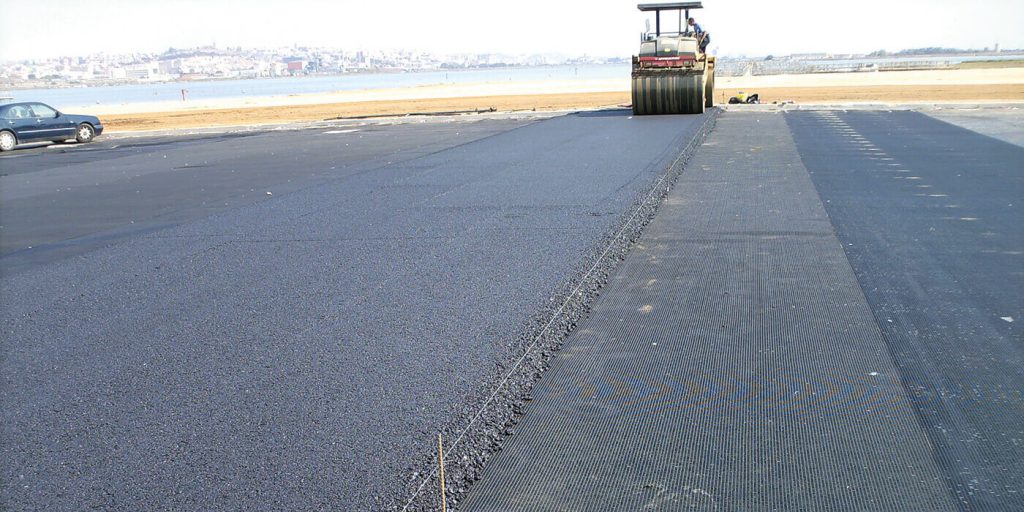
Protection of the base geomembrane in a landfill
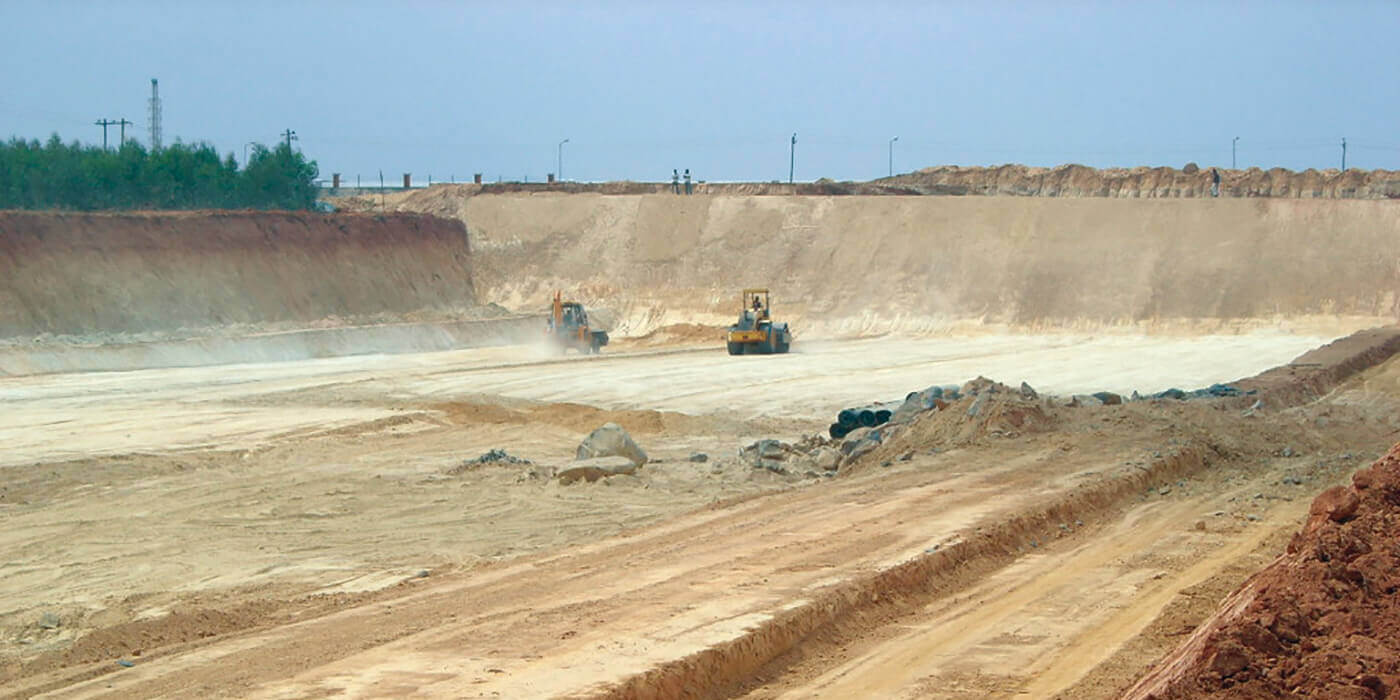
Geodren® PPST for Bangalore landfill
Geodren® PPST: nonwoven geotextile used as a protective layer for the base geomembrane in the construction of a landfill.
Problem
The Bangalore landfill was designed in response to growing protests from environmentalists and local community representatives. The protests concerned environmental damage and harm to the health of residents in neighboring villages. In particular, leachate seeping from illegal waste dumps that predated the landfill had polluted the groundwater. This groundwater supplied drinking water to local residents and fed the water pools used for livestock.
In addition, the nearby military airport and Bangalore International Airport, both less than 20 km from the landfill site, had experienced several incidents caused by birds in the area. Urgent action was therefore needed to clean up the illegal dump and create a new storage site. The site chosen for the landfill lay close to the water table. For this reason, the waterproofing level of the waste deposit, along with leachate drainage and treatment, were matters of primary importance.
Solution
Given the good load-bearing capacity of the foundation soil, engineers chose to focus entirely on the primary waterproofing system and its protection. They chose to use different types of nonwoven geotextiles to effectively protect the 2 mm HDPE geomembrane.
At the bottom of the landfill, beneath the geomembrane, Geodren® PPST 2000 was installed, a nonwoven geotextile made of virgin polypropylene weighing 2,000 g/m². Above the geomembrane, also at the base of the landfill, Geodren® PPST 400 was installed, a nonwoven geotextile made of virgin polypropylene weighing 400 g/m². This material protects it from possible punctures and eases mechanical stress caused by differential settlement of the waste mass. Geodren® PPST 1200 was used on the side slopes, a nonwoven geotextile made of virgin polypropylene weighing 1,200 g/m², to ensure effective protection.
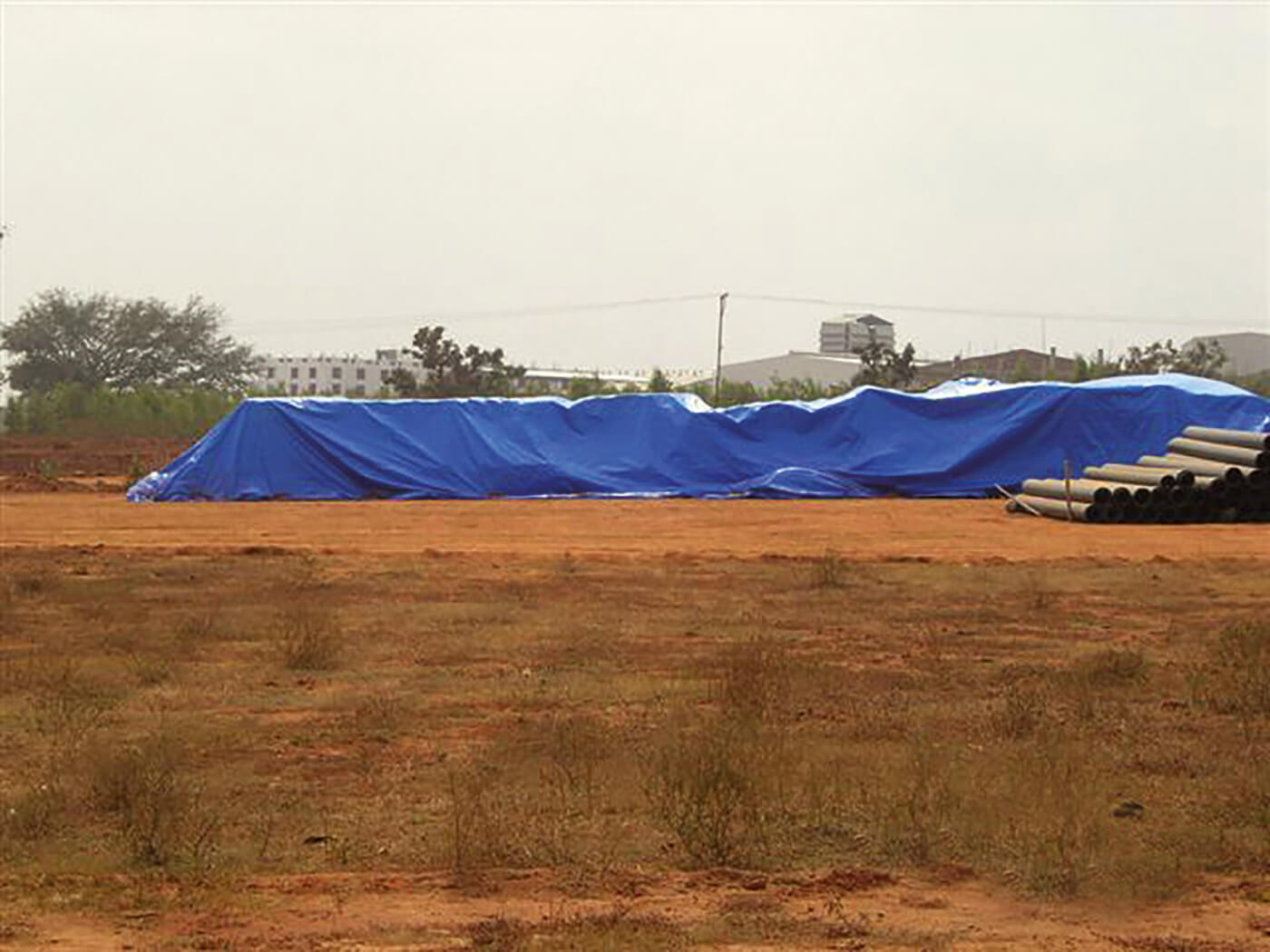
A geotextile with such a high area weight also provides good resistance to UV radiation. UV rays are in fact one of the main causes of damage to polypropylene fiber, especially when exposure periods exceed 30 days. This creates a risk for the geomembrane, which might not remain sufficiently protected. The nonwoven geotextile used was manufactured with polypropylene fibers specifically treated to withstand direct UV exposure for a minimum of 18 months.
Client:
BANGALORE MUNICIPALITY
Contractor:
RAMKY ENVIRO ENGINEERS LTD
Products:
100.000 m2 of Geodren® PPST 400, 1200, 2000 nonwoven geotextiles.

Application

You might also be interested in...
Coastal defence on the Black Sea